qn010@qinuo.net
Tel:+86 13616068720

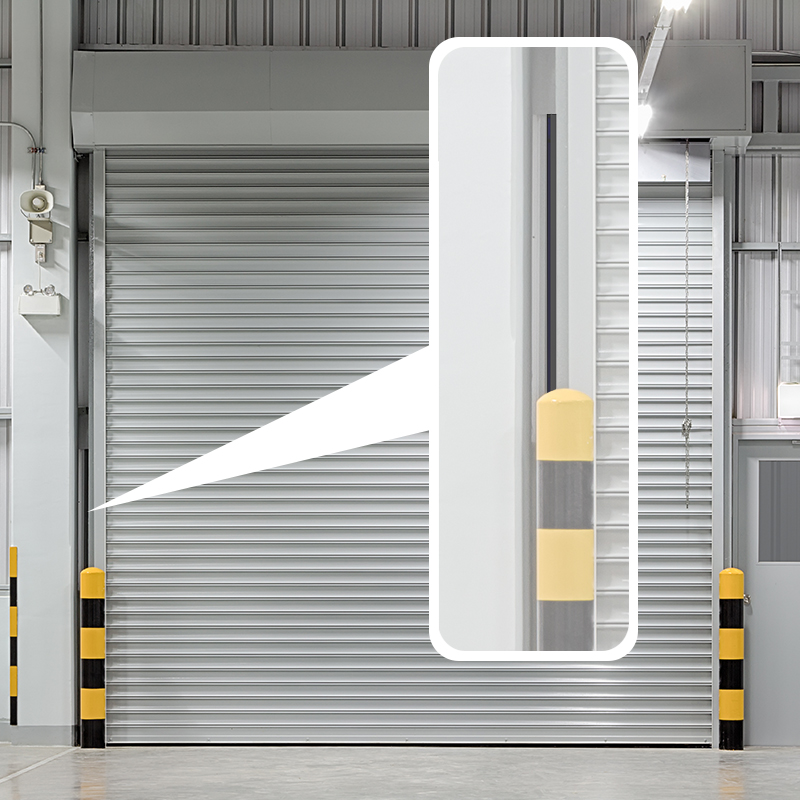
Industrial facilities relying on high‑speed doors or sectional doors (e.g. warehouses, loading docks, manufacturing plants) face a critical challenge: ensuring that moving doors open or close safely while preventing accidents — such as doors closing on people, forklifts or equipment. Traditional safety solutions (like pressure‑sensitive edges or simple photo‑cells) often have limitations. The use of a safety light curtain, and specifically a criss‑cross beams design, offers a more reliable, maintenance‑free, and comprehensive safety solution.
A safety light curtain typically consists of two columns: an emitter and a receiver. The emitter sends multiple infrared light beams in parallel, which the receiver monitors. As long as all beams reach the receiver unobstructed, the system considers the door path clear and allows the door to operate. If any beam is interrupted — by a person, vehicle, or object — the light curtain immediately sends a stop (or reverse) signal to the door controller.
Unlike physical edge sensors that require contact (e.g. pressure edges) or simple photocells that monitor only a limited zone, a light curtain provides a non‑contact, full‑height protection across the door opening — greatly reducing the risk of entrapment or collision.
Taking the example of the product Criss‑cross beams safety light curtain for High-speed and sectional doors from U-SENSORS, here are the main features and the resulting advantages:
Criss‑cross beams design: The multi-beam (8‑beam) criss‑cross pattern increases detection reliability across the entire width and height of the door opening.
Supports high-speed doors (up to 1.6 m/s): This makes it suitable for fast‑operating industrial doors, where rapid and safe reaction is critical.
Operating range up to 10 m: Allows flexible mounting and ensures that even large or wide doors can be covered.
Max protection height ~ 1500 mm: Provides coverage for human passage, forklifts, pallet loads, or other objects that might pass under or through the door.
Robust, industrial‑grade housing (IP67): Resistant to dust, dirt, water — suitable for harsh factory or outdoor environments.
Electrical synchronization & push‑pull semiconductor output (PNP/NPN): Improves immunity to stray light, flicker, or strobe interference; ensures stable, reliable detection.
Real‑time self‑checking: The system monitors itself to ensure functionality, reducing need for regular manual maintenance or checks.
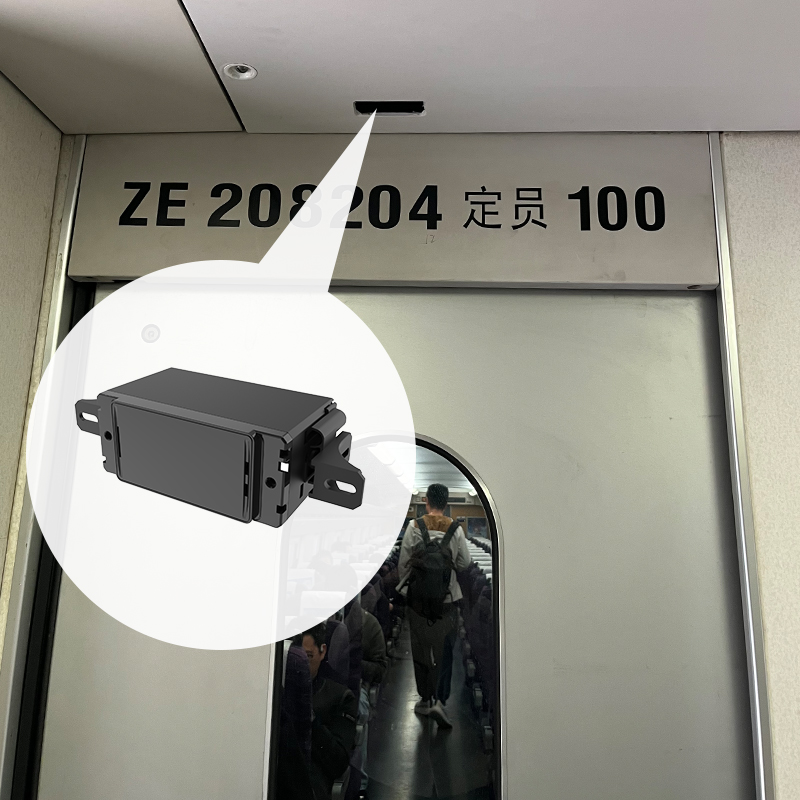
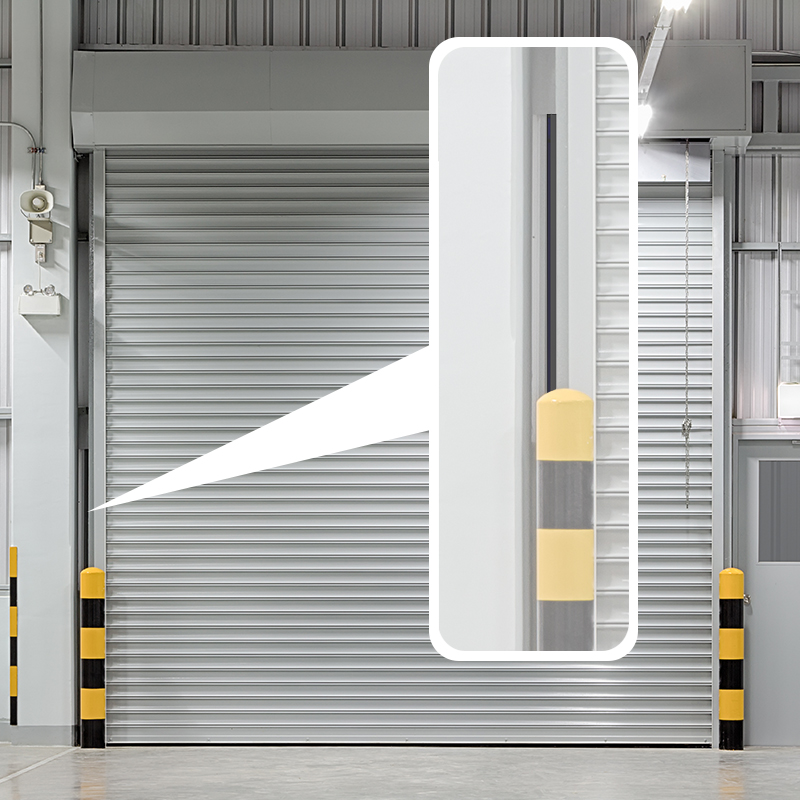
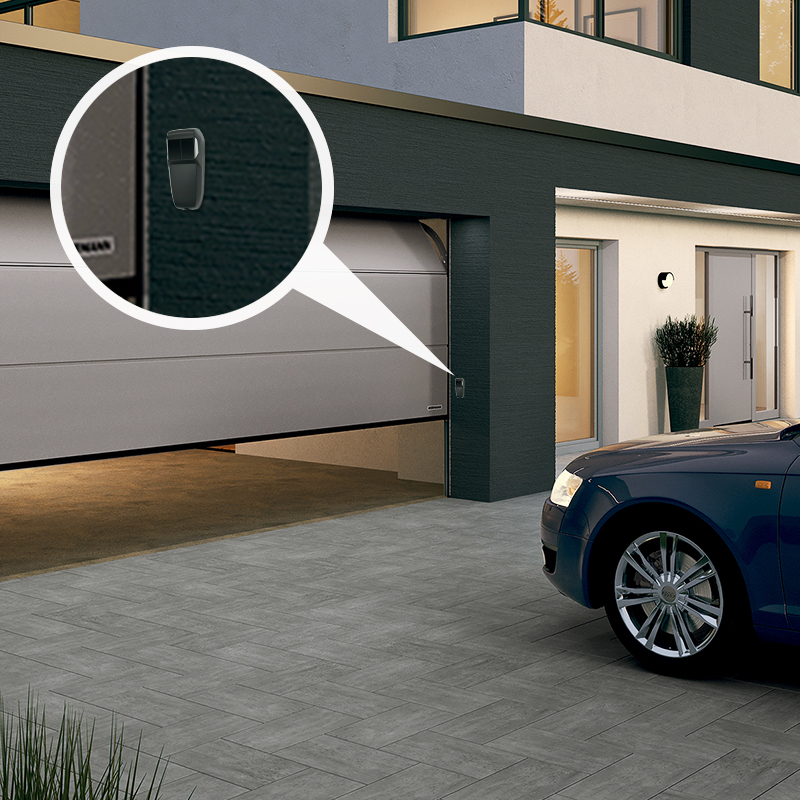
Flexible installation: Emitter and receiver edges can be mounted directly into door guide rails, or to the front or rear of the door. The system supports both “blanking” (when parts of the door itself might block beams during motion) and “static” versions.
Because of these features, this light curtain solution is often superior to older safety methods like pressure‑controlled safety edges, which degrade over time and require physical contact — meaning that in some fast or dynamic scenarios, damage may already occur before the door stops.
Applying such a criss‑cross beams light curtain to high-speed or sectional doors brings multiple practical benefits:
Enhanced safety for personnel and vehicles: Prevents accidents involving personnel (e.g. forklift drivers, workers) or objects passing through the door — especially critical in busy logistics centers or factories.
Reduced maintenance and higher reliability: Because detection is non‑contact and self‑monitoring, the system is less prone to wear and degradation versus mechanical or pressure‑based sensors.
Adaptable to different door types: Works for high-speed doors, rolling shutters, sectional doors, etc., making it a versatile choice across different industrial setups.
Wide-area and full-height coverage: By covering a large opening area and detecting at different heights, it ensures that no gap is left unmonitored — even for tall vehicles, forklifts, or stacked pallets.
Minimizing risk of entrapment and damage: Because the system detects objects or people before physical contact, doors can stop or reverse in time, reducing the risk of injury or damage to goods/equipment.
Pressure-controlled safety edges need physical contact to detect — meaning that the door may already exert force or cause damage before triggering. They also require regular maintenance, and their performance degrades when sensors get dirty or worn out.
Basic photocell sensors only detect in limited zones (often near the floor), and may fail to detect smaller objects or items at higher positions. This leaves blind spots.
In contrast, a well‑designed safety light curtain provides non-contact, full-zone, automatic detection consistently and reliably — making it a best practice for safety compliance, especially in high-traffic industrial environments.
For industrial settings using high-speed or sectional doors — such as warehouses, loading bays, logistics centers, or manufacturing plants — deploying a criss‑cross beams safety light curtain such as the U‑SENSORS product offers a robust solution to prevent entrapment or collision incidents. Its combination of wide coverage, rapid detection, environmental resistance, and low maintenance makes it a superior alternative to traditional safety edges or photocells.
By ensuring that any person or object crossing the door opening is detected before door movement, such a light curtain can significantly improve operational safety, reduce downtime, and lower the risk of accidents or damage.