qn010@qinuo.net
Tel:+86 13616068720

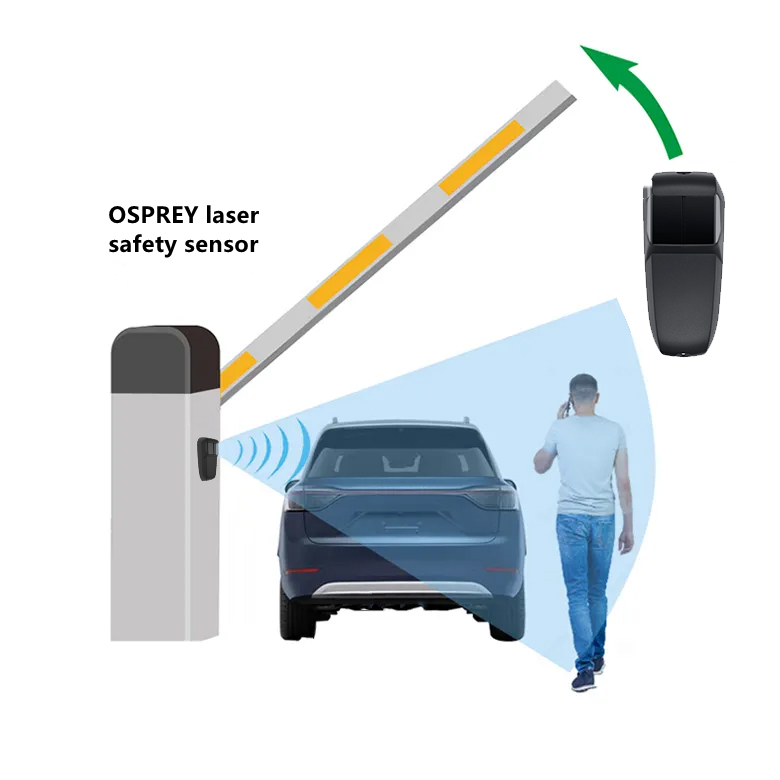
In modern parking facilities, ensuring the safety of vehicles and pedestrians has become a top priority. As the flow of cars increases in commercial buildings, shopping centers, residential communities, and public parking lots, the need for reliable barrier gate safety sensors continues to grow. A parking barrier gate sensor, installed directly on the barrier arm, provides real-time detection of vehicles and pedestrians, preventing accidental collisions and ensuring smooth barrier operation.
This article explains the key application scenarios and advantages of using a parking barrier gate sensor in parking lot entrances.
The primary application of a barrier gate sensor is at the entrance of a parking lot, where vehicles and people frequently pass through. The sensor continuously detects motion in front of and around the barrier arm, making sure the gate only lowers when the area is completely clear.
Prevents the barrier arm from striking vehicles
Protects pedestrians from unexpected gate movement
Improves the overall safety level of the parking entrance
Reduces equipment damage and maintenance costs
In busy parking facilities, efficiency matters. A parking barrier gate sensor helps operators improve traffic flow by detecting vehicles in real time.
When a car approaches the gate, the sensor identifies the vehicle
The system confirms the lane is clear
The barrier arm lifts smoothly and safely
This ensures accurate vehicle recognition, reduces queuing time, and prevents false openings or closings caused by environmental interference.
Many parking entrances are shared by both vehicles and pedestrians. Without proper detection, pedestrians face the risk of being hit by a lowering barrier arm. The barrier gate sensor significantly reduces these risks.
Shopping mall parking entrances
Residential community gates
Office building parking access lanes
By identifying pedestrians in the detection zone, the sensor ensures that the gate remains open until the area is fully safe.
Parking lots often operate 24/7. At night or during rain, fog, or low-light conditions, visibility becomes a challenge. The barrier gate sensor provides stable detection performance regardless of lighting conditions, ensuring that vehicles and pedestrians are accurately recognized.
Works reliably in dark environments
Not affected by weather such as rain or fog
Provides consistent detection accuracy
This feature is especially important for underground parking garages or outdoor parking areas with limited illumination.
In many commercial parking systems, unauthorized tailgating is a serious issue. When one vehicle attempts to follow another closely without proper access, the gate may malfunction or cause safety hazards.
The system detects multiple vehicles approaching
The gate remains open only when appropriate
Unauthorized entry attempts can be more easily controlled
This improves security management and reduces operational risks.
Barrier arms are frequently damaged when they accidentally close on vehicles or objects. A parking gate sensor reduces the chances of impact by ensuring the barrier arm only lowers when the lane is clear.
Extends the lifespan of the barrier arm
Minimizes repair costs
Decreases downtime of parking equipment
For high-traffic parking lots such as malls, airports, and business centers, this is a significant operational advantage.
A parking barrier gate sensor plays a crucial role in modern parking facility management. By providing real-time detection of vehicles and pedestrians, the sensor ensures safe, efficient, and reliable barrier operation in a variety of environments.
Whether it is improving vehicle flow, protecting pedestrians, preventing accidents, or enhancing security, the parking barrier gate sensor is an essential device for any parking entrance system.